
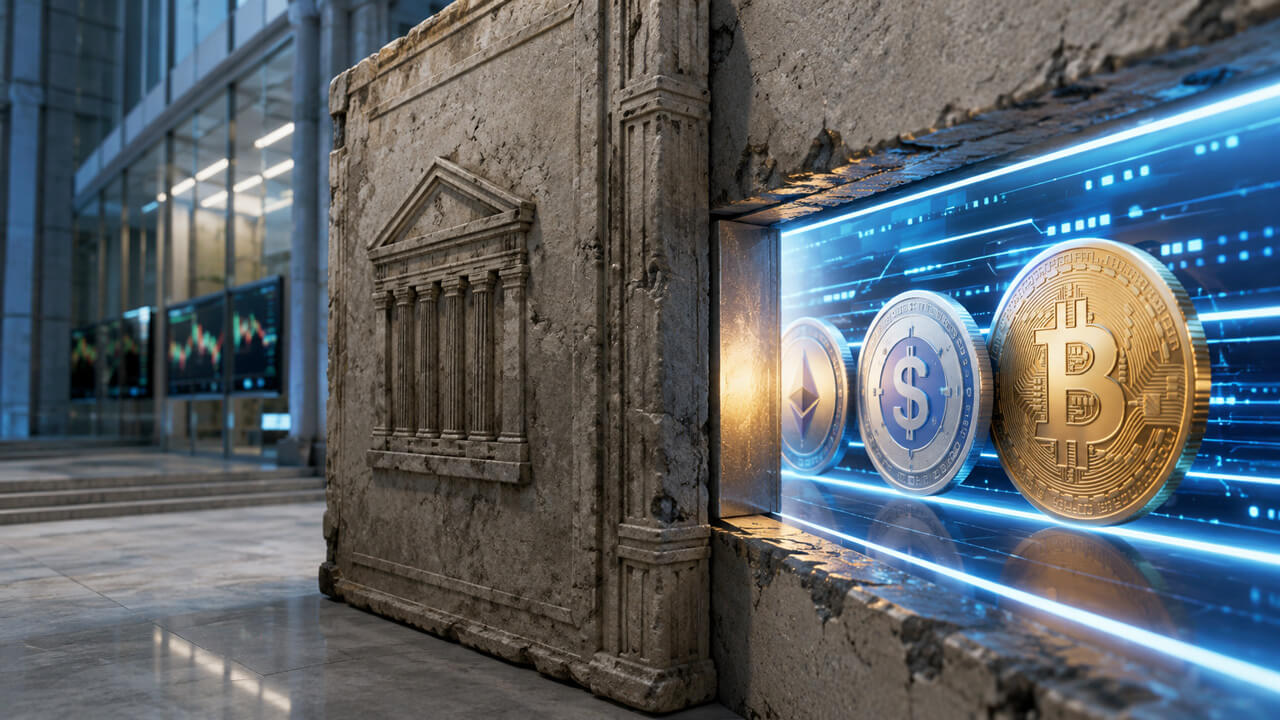


For years, blockchain conversations were dominated by Bitcoin, Ethereum and the rapidly changing prices of cryptocurrencies. That picture is becoming more complicated. Increasingly, some of the most interesting blockchain projects have little to do with creating another digital coin and much more to do with putting existing financial assets onto digital infrastructure.
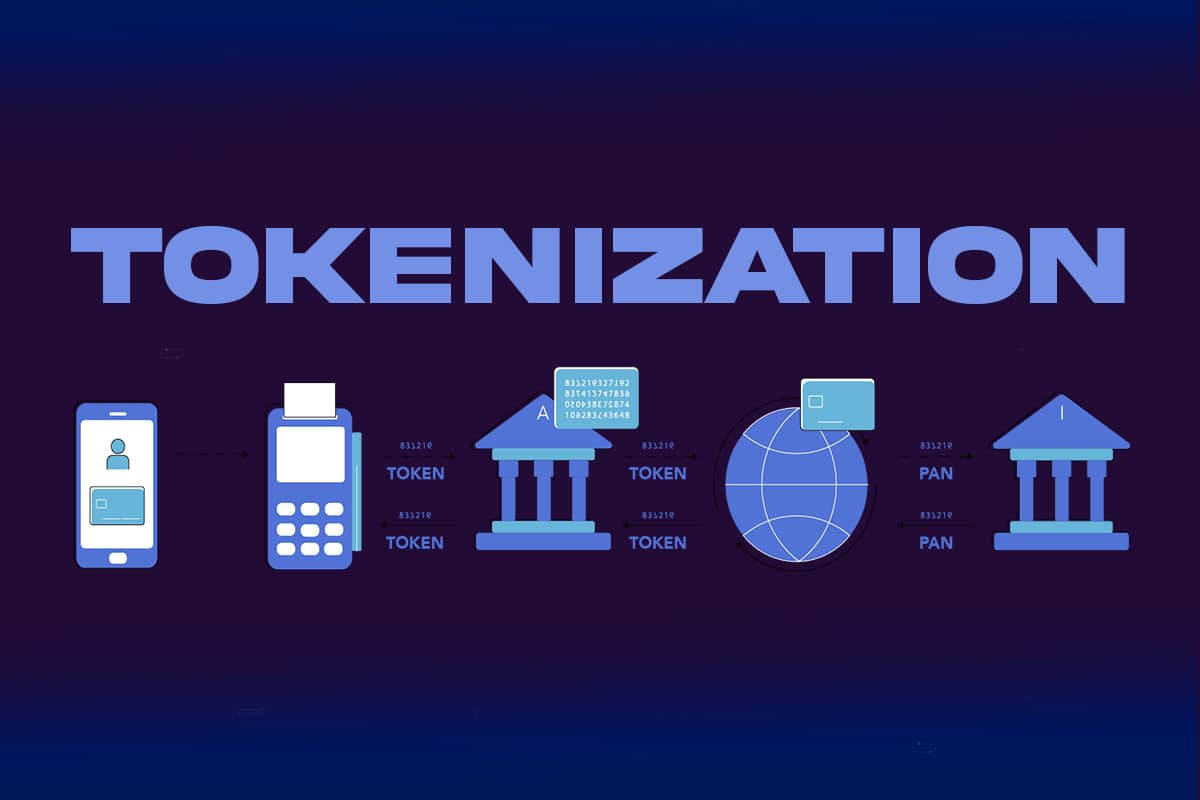
This process is known as tokenisation.
In simple terms, tokenisation means representing an asset or financial claim as a digital token, typically recorded on a distributed ledger. The idea sounds technical, but its potential applications are surprisingly familiar: bonds, investment funds, securities, money-market instruments and other financial assets could potentially be issued, transferred or settled using blockchain-based infrastructure.
Europe is taking the subject seriously. The European Central Bank reported that tokenised assets on public blockchains reached an estimated global market capitalisation of around €38 billion in February 2026, compared with approximately €7.4 billion at the beginning of 2024. The market is still tiny compared with traditional financial markets, but the pace of development has attracted significant institutional attention.
For German investors and businesses, this could eventually be more important than another cryptocurrency launch. Tokenisation has the potential to change some of the infrastructure underneath financial markets without requiring investors to abandon traditional assets.
What Does Tokenisation Actually Mean?
The easiest way to understand tokenisation is to imagine taking something that already exists financially and creating a digital representation of it on a blockchain.
Suppose an investment fund has shares that are traditionally recorded through established financial-market infrastructure. A tokenised version could represent those shares on a distributed ledger, subject to the appropriate legal and technical framework. Instead of ownership and transaction information being maintained entirely through separate traditional systems, some of the process could take place on blockchain infrastructure.
The token itself is not necessarily the physical or financial asset.
That distinction matters.
A token may represent a legal claim, ownership interest or other entitlement, but the rights attached to it depend on the legal structure of the product. Simply placing information about an asset on a blockchain does not automatically transfer ownership of the underlying asset.
This is one reason tokenisation requires cooperation between technology specialists, financial institutions and regulators.
Why Are Financial Institutions Interested?
The attraction is not simply that blockchain is fashionable.
Financial markets involve a surprisingly large number of processes. An asset may be issued by one institution, recorded by another, traded through a separate venue and settled through another part of the financial infrastructure. Different systems need to communicate with each other, and transactions can involve several layers of reconciliation.
Tokenisation could potentially bring some of those processes closer together.
A tokenised asset can carry information and interact with smart contracts. Certain transaction conditions could therefore be automated rather than handled manually through separate systems.
The European Central Bank has identified potential benefits across the asset lifecycle, including issuance, distribution, trading and settlement. It has also noted that tokenisation could create opportunities for greater automation and more efficient financial-market infrastructure.
This is particularly interesting because the people developing tokenisation are not limited to crypto-native companies.
Banks, exchanges, asset managers and central banks are increasingly involved.
What Could Tokenised Bonds Look Like?
Bonds provide a useful example because they already involve structured information about ownership, payments and maturity.
A tokenised bond could represent the investor’s claim on the bond through a distributed ledger. Smart contracts could potentially automate parts of the process, such as payment schedules or certain settlement conditions.
This does not mean every bond will suddenly move onto a public blockchain.
Financial institutions still need to deal with legal ownership, investor identification, compliance, custody and market infrastructure. But tokenisation could potentially reduce some of the friction between these different components.
Europe has already moved beyond purely theoretical discussions. The ECB noted in March 2026 that European issuers had placed close to €4 billion in fixed-income instruments based on distributed ledger technology since 2021, including digital sovereign debt issuances by EU member states.
That is still a small market.
But it demonstrates that tokenised finance has moved from an experimental concept toward actual financial-market activity.
Could Tokenisation Make Markets More Efficient?
Potentially, although the benefits should not be exaggerated.
One of the strongest arguments for tokenisation is the possibility of reducing the number of separate systems involved in a transaction. If ownership records, transaction instructions and settlement processes can interact more directly, some reconciliation work could potentially be reduced.
There is also the possibility of faster settlement.
Traditional securities transactions can involve multiple steps between the moment a trade is agreed and the moment the transaction is fully settled. Blockchain-based systems can potentially bring parts of that process closer together.
The ECB’s Project Agorá has provided an interesting example. In May 2026, the project reported successful testing of tokenised central-bank reserves and tokenised commercial-bank deposits for cross-border wholesale payments, demonstrating atomic settlement across multiple currencies and jurisdictions.
The significance is not that blockchain has suddenly solved international payments.
Rather, it demonstrates that programmable and tokenised infrastructure can potentially address some long-standing inefficiencies in financial settlement.
What Does This Mean for Germany?
Germany has a large financial sector and is deeply integrated into European capital markets, so developments in tokenisation could eventually have practical consequences for German investors and businesses.
Imagine a future in which certain investment products can be issued, transferred and settled through digital infrastructure with fewer manual steps. An investor might still use a familiar bank or investment platform, but the underlying settlement process could involve distributed-ledger technology.
This is important because mainstream adoption may not look like a typical crypto transaction.
A German investor may never open a blockchain wallet or purchase a cryptocurrency. They could still benefit from blockchain infrastructure if their bank, broker or investment provider uses tokenised securities behind the scenes.
That may actually be the more realistic path toward mass adoption.
Where Does the Euro Fit In?
One of the biggest questions for Europe is how tokenised assets will be settled.
If financial assets are represented on blockchain networks but the payment side still depends entirely on conventional systems, some of the potential benefits of tokenisation may remain fragmented.
This is why central-bank money is becoming an important part of the discussion.
The Eurosystem’s Appia initiative is intended to help shape a European tokenised financial ecosystem while keeping central-bank money as an anchor of the financial system. Its related Pontes initiative is designed to connect distributed-ledger technology platforms with existing Eurosystem payment infrastructure. The ECB has said Pontes is planned for launch in September 2026.
For Germany and the wider euro area, this could be an important development.
It suggests that European policymakers are not simply asking whether blockchain can exist alongside traditional finance. They are exploring how blockchain-based markets could connect to existing monetary infrastructure.
What About Real-World Assets?
Tokenisation is also moving beyond traditional securities.
The broader “real-world assets” category includes attempts to represent assets such as real estate, commodities, funds and other forms of value through blockchain-based tokens.
The potential attraction is fractionalisation.
An asset that is expensive or difficult to divide could theoretically be represented through smaller digital interests, making it easier for different investors to participate—provided the legal and financial structure supports that arrangement.
But tokenisation does not magically make an illiquid asset liquid.
There still needs to be genuine demand, appropriate regulation, reliable valuation and a functioning secondary market.
The ECB has specifically identified the lack of sufficient on-chain secondary-market liquidity as one of the barriers that could limit the ability of tokenisation to scale.
This is an important reality check.
Creating a token is relatively easy.
Creating a useful market around that token is much harder.
What Are the Risks?
Tokenisation introduces new opportunities, but it also creates new technical and financial dependencies.
Smart contracts can contain vulnerabilities. Blockchain networks can experience congestion or operational problems. Different tokenisation platforms may not be interoperable. Investors may also misunderstand what legal rights a particular token actually provides.
There is another issue: blockchain records can be technically secure while the information connected to them is wrong.
If a token claims to represent ownership of an asset, someone still needs to ensure that the underlying asset exists, that the legal claim is valid and that the tokenisation structure accurately reflects that relationship.
Blockchain can provide a reliable record of a transaction.
It cannot independently verify every real-world fact behind that transaction.
Regulation Will Be Crucial
Tokenised securities cannot simply be treated as ordinary cryptocurrencies.
The regulatory framework depends on what the token represents and how it is structured. A token representing a regulated financial instrument may fall under securities and financial-market rules rather than the same framework used for other crypto-assets.
This distinction is particularly important in Europe.
The EU has introduced MiCA for many crypto-assets and related services, but tokenised financial instruments can remain subject to existing financial-market legislation. European authorities are also continuing to refine the regulatory environment as digital markets develop.
For German businesses, regulatory certainty may ultimately be one of the biggest factors determining whether tokenisation becomes a mainstream financial technology.
Institutions are unlikely to move large amounts of capital onto new infrastructure without confidence around ownership, settlement, investor protection and legal enforceability.
Could Tokenisation Change Investing?
It could, but probably not in the way early crypto enthusiasts imagined.
The future may not involve every investor buying obscure tokens on decentralised exchanges.
Instead, tokenisation could become largely invisible.
A German investor could purchase a fund through a familiar investment platform. A company could issue digital securities. A bank could settle transactions using tokenised assets. A financial institution could use blockchain-based infrastructure to transfer collateral.
The blockchain may operate underneath the interface without the user ever thinking about it.
That would still represent a significant change.
The Bigger Blockchain Story Is Moving Away From Speculation
Cryptocurrency will remain an important part of blockchain technology, but tokenisation demonstrates why the technology should not be reduced to digital coins.
The European financial system is actively exploring how distributed ledgers, smart contracts and tokenised assets could work with existing market and payment infrastructure. The ECB’s Appia and Pontes initiatives, together with experiments such as Project Agorá, show that the discussion has moved well beyond theoretical presentations.
There are still major obstacles.
Liquidity needs to develop. Regulations need to evolve. Systems need to become interoperable. Security must improve. And the economic benefits need to be large enough to justify changing established financial infrastructure.
But the direction is becoming clearer.
For German readers, the most important blockchain story of the next few years may not be another cryptocurrency trying to reach a new price record.
It may be the quieter transformation happening underneath traditional finance—where bonds, funds, payments and other assets gradually become programmable digital instruments that can move through a new generation of European financial infrastructure.