

There is a familiar pattern that often appears when cryptocurrency markets become optimistic. Bitcoin starts moving higher, attention returns to digital assets and investors who had been waiting on the sidelines begin looking for opportunities with greater potential returns.
That is often when altcoins enter the conversation.
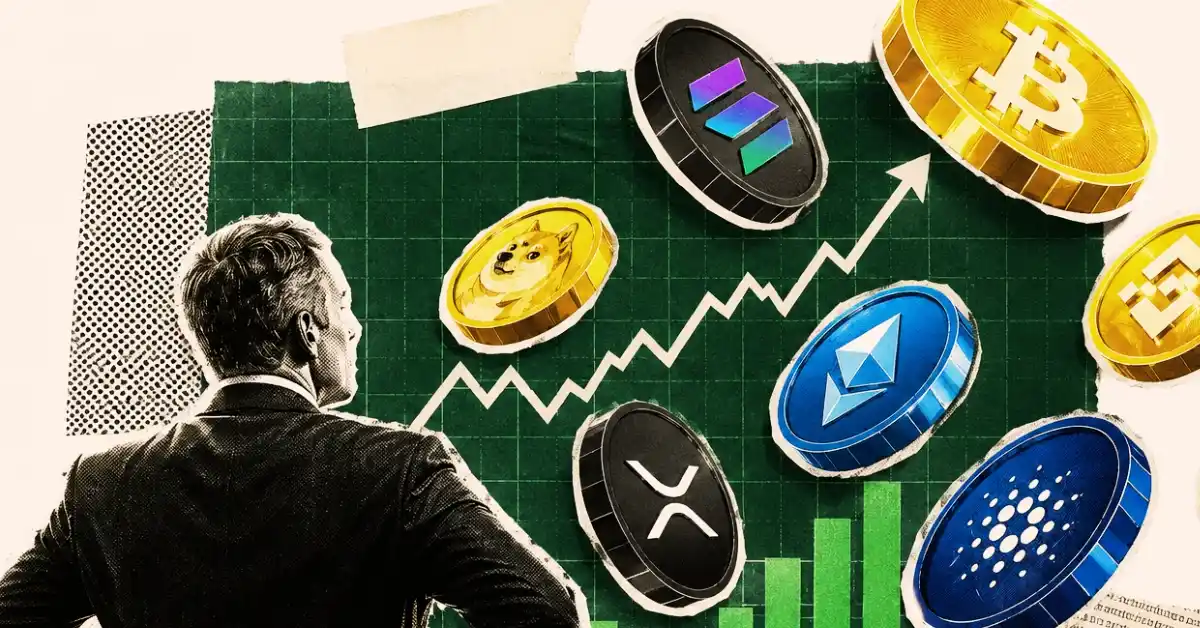
A cryptocurrency that had barely attracted attention during a quiet market can suddenly rise dramatically once money begins flowing back into the sector. Some altcoins may gain 20% or 30% while Bitcoin moves only a few percent. In particularly speculative periods, smaller tokens can multiply in value within a surprisingly short time.
For new investors in Germany, this can be tempting.
If Bitcoin has already become expensive, an altcoin with a much smaller market value can appear to offer more room for growth. But the same characteristics that allow altcoins to rise quickly can also cause them to fall much faster.
Understanding why this happens is therefore more useful than simply assuming that altcoins are “better” during a bull market.
Bitcoin Usually Sets the Tone
Bitcoin remains the largest and most widely recognised cryptocurrency.
Because of its size, liquidity and position in the overall digital-asset market, changes in Bitcoin sentiment can influence the rest of the crypto market.
When investors become more confident about Bitcoin, some eventually begin looking for other opportunities.
This can create a sequence.
Bitcoin attracts fresh capital.
The broader market becomes more optimistic.
Large-cap altcoins start receiving attention.
Investors then move further down the market-cap rankings in search of assets that appear to have greater upside.
By the time enthusiasm reaches smaller tokens, speculation can become considerably stronger.
This process is sometimes described as capital rotating through different parts of the crypto market.
It is not a guaranteed pattern, but it has appeared repeatedly during major market cycles.
Why Smaller Altcoins Can Move So Quickly
Market size is one of the biggest reasons.
Imagine a cryptocurrency with a market capitalisation of €2 billion.
It does not necessarily require the same amount of new buying pressure as Bitcoin to move significantly in percentage terms.
A relatively small increase in demand can have a much larger effect on a smaller market.
Liquidity also matters.
If there are fewer buyers and sellers, individual trades can move the market more aggressively.
This works in both directions.
Strong demand can push the price sharply higher.
But when sentiment changes, a lack of buyers can make the decline equally dramatic.
That is why the phrase “high growth potential” should always be considered alongside “high downside risk.”
The Role of Market Sentiment
Altcoins are particularly sensitive to investor psychology.
When people are optimistic, they tend to become more willing to accept risk.
A cryptocurrency that looked too speculative six months earlier can suddenly seem attractive.
Investors start talking about the next big project.
Social-media activity increases.
Influencers publish price predictions.
New traders enter the market.
This creates a feedback loop.
Rising prices attract attention.
Attention attracts more buyers.
More buyers push prices higher.
Higher prices create even more attention.
The process can continue until valuations become disconnected from the underlying fundamentals.
At that point, even a relatively small change in sentiment can reverse the trend.
Why Altcoins Often Follow Bitcoin
Bitcoin can act as the market’s confidence indicator.
When Bitcoin falls sharply, investors often become more cautious across the entire crypto sector.
Capital may move into cash or stablecoins.
Riskier positions are reduced.
Altcoins can therefore decline much more heavily than Bitcoin during market corrections.
For example, Bitcoin might fall 10% during a broad market sell-off while a smaller altcoin loses 30% or more.
This does not necessarily mean the altcoin’s technology has suddenly become worse.
It may simply be more sensitive to changes in liquidity and investor confidence.
The same sensitivity that creates larger gains during optimistic periods can create larger losses during fearful periods.
What Happens When Bitcoin’s Market Dominance Changes?
Another concept worth understanding is Bitcoin dominance.
This refers broadly to Bitcoin’s share of the total cryptocurrency market capitalisation.
When Bitcoin’s dominance is high, capital may be concentrated in Bitcoin.
When investors become more comfortable with risk, money can begin moving into other cryptocurrencies.
If altcoin prices rise while Bitcoin’s market value remains relatively stable, Bitcoin’s share of the overall market can decline.
This does not automatically mean an “altcoin season” has begun.
Market dominance is simply one indicator.
Investors should consider it alongside trading volumes, liquidity, broader market conditions and actual activity within individual projects.
Why Social Media Can Make Altcoin Moves Bigger
Social media plays an unusually large role in cryptocurrency markets.
A new token can become popular within hours.
A single post from a well-known personality can generate enormous attention.
Online communities can create strong narratives around a particular blockchain, meme coin or emerging project.
This can amplify price movements.
But social-media attention has a short memory.
The same community celebrating a 100% gain can become pessimistic after a 30% decline.
This is why investors should be careful about using social-media popularity as evidence of long-term value.
A cryptocurrency can be extremely popular without having sustainable demand.
Not Every Altcoin Rally Is Based on Fundamentals
Some altcoin rallies are driven by genuine developments.
A project might launch a major upgrade, attract developers, gain meaningful users or introduce a useful new application.
In those cases, investors may have a fundamental reason to reassess the project’s future.
Other rallies are primarily speculative.
The token rises because traders believe somebody else will pay a higher price later.
These two situations can look almost identical on a chart.
The difference becomes visible only when you investigate what is actually happening underneath the price.
That is why a rapidly rising altcoin deserves more research, not less.
Token Supply Can Magnify the Move
Supply dynamics can have a significant impact on altcoin prices.
A project may have a relatively small circulating supply while a much larger number of tokens remain locked.
If demand increases while available supply remains limited, the price can move quickly.
But future token releases can create the opposite effect.
If millions or billions of additional tokens enter circulation, existing holders may face dilution.
Investors should therefore examine the project’s token-unlock schedule when evaluating a rapidly rising cryptocurrency.
A spectacular price chart can look very different when viewed alongside future supply.
Why Liquidity Matters More Than Many Beginners Realise
Liquidity is one of the less exciting topics in crypto investing, but it becomes extremely important during volatile markets.
A highly liquid asset generally has many buyers and sellers.
That makes it easier to enter or exit positions without dramatically affecting the market price.
Smaller altcoins can have much thinner liquidity.
This creates a problem during both rallies and crashes.
A token may appear to be worth €5 based on the latest traded price, but selling a large position may not be possible at exactly €5 if there are not enough buyers.
The quoted price is not necessarily the price you will receive for every unit.
This is particularly important for investors considering smaller altcoins simply because their percentage gains appear attractive.
Why German Investors Should Consider the European Regulatory Environment
Altcoins are not operating outside the wider financial system anymore.
European crypto regulation has become increasingly important, particularly following the implementation of MiCA.
The regulatory classification of a particular token can depend on its characteristics, structure and intended function.
For investors, this means access to a cryptocurrency can vary between platforms and jurisdictions.
A token being available on an international exchange does not necessarily mean it will be offered by every European service provider.
German investors should therefore consider both the investment case and the regulatory environment surrounding the asset and the platform through which they access it.
This becomes particularly relevant when investing in smaller or newer projects.
What Happens When the Market Turns?
This is where the difference between Bitcoin and smaller altcoins can become obvious.
During a strong market, investors tend to focus on potential gains.
During a downturn, they focus on liquidity and risk.
The altcoin that gained 150% may fall 60%.
The token that appeared unstoppable may suddenly have almost no trading activity.
A project that depended heavily on speculative attention can lose visibility extremely quickly.
This is why investors should never evaluate an altcoin only during a bull market.
Ask how the project behaved during previous periods of stress.
Did developers continue working?
Did users remain active?
Did liquidity disappear?
Did the community remain engaged?
A strong project should ideally have reasons to exist beyond rising prices.
Should Investors Buy Altcoins After a Big Rally?
There is no universal answer.
A rising price does not automatically mean that an asset is overvalued.
But buying simply because something has already increased dramatically can be dangerous.
Before entering a position, investors should understand what has caused the rally.
Was there a major technical development?
Did adoption increase?
Did institutional participation change?
Was there a supply event?
Or is the movement mainly being driven by social-media excitement?
If the explanation is unclear, waiting may be more sensible than chasing the price.
There will always be another cryptocurrency attracting attention.
A Better Way to Think About Altcoin Growth
Instead of asking, “How high can this altcoin go?” consider several different questions.
How large is the market today?
How many tokens are circulating?
How much additional supply could enter the market?
Who actually uses the network?
What problem does it solve?
How strong is its developer ecosystem?
How much liquidity exists?
Who owns the largest token positions?
What happens if the broader crypto market falls?
These questions will not predict the future.
They will, however, give you a clearer understanding of what you are buying.
The Opportunity and the Warning Are the Same Thing
Altcoins can outperform Bitcoin because they are generally smaller, less liquid and more sensitive to changes in investor demand.
Those characteristics create opportunity.
They also create risk.
When capital flows into the market, smaller assets can react dramatically.
When capital leaves, they can fall just as dramatically.
That is why investors should avoid thinking about altcoins as simply “cheaper Bitcoin.”
They are different assets with different technology, token economics, communities and risk profiles.
Some may become important blockchain networks.
Some may remain niche projects.
Some may disappear completely.
The difficult part is identifying which category a particular project belongs to before the market has already made the decision.
For German investors, the most sensible approach is therefore to treat an altcoin rally as a reason to investigate, not as an automatic invitation to buy.
The fastest-growing cryptocurrency on your screen may be an exciting opportunity—but the more important question is whether anything underneath that rising price can support the growth once the excitement fades.