



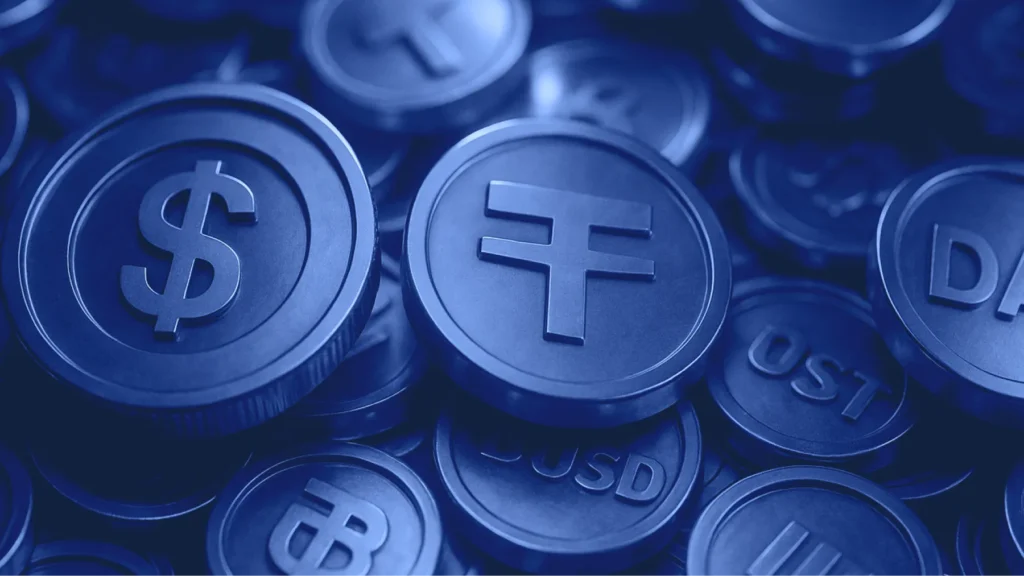
Stablecoins were created to solve one of the biggest problems in cryptocurrency: price volatility. While Bitcoin and many other digital assets can move significantly within a single day, stablecoins are generally designed to maintain a relatively stable value by referencing an asset such as the euro or US dollar. This makes them useful for trading, transferring funds, accessing decentralised finance and moving money between different parts of the crypto ecosystem.
Their growing importance has also attracted greater regulatory attention.
For European policymakers, stablecoins are not simply another type of cryptocurrency. A widely used stablecoin can potentially become part of payment systems, financial markets and everyday digital transactions. If users depend on a token to maintain a stable value, confidence in its reserves, issuer and redemption process becomes extremely important.
This is one reason the European Union has introduced specific rules for stablecoins under the Markets in Crypto-Assets Regulation, commonly known as MiCA. For German crypto users, understanding these rules can help explain why some stablecoins may be treated differently from others and why certain products available globally may not necessarily have the same status within Europe.
What Makes a Stablecoin Different?
A traditional cryptocurrency generally has a market price determined by supply and demand.
Bitcoin is the obvious example. Its value can move considerably depending on investor demand, market liquidity, economic conditions and sentiment.
A stablecoin attempts to behave differently.
The issuer generally creates a token that is intended to maintain a relatively stable value against something else. A euro-linked stablecoin, for example, may aim to maintain a value close to €1, while a dollar-linked stablecoin may attempt to remain close to $1.
That stability makes the tokens useful.
A trader can move funds between different crypto-assets without immediately converting everything into traditional bank money. A business may potentially use stablecoins for digital settlement. A DeFi user can interact with applications using an asset designed to be less volatile than Bitcoin.
But stability creates a responsibility.
If users believe a token is worth €1, they need confidence that the system supporting that value can continue to function.
Why Regulators Care About Stablecoins
Imagine that millions of people hold a stablecoin believing that every token can be redeemed for approximately €1.
If confidence suddenly disappears, holders may all try to redeem their tokens at the same time.
That can create significant pressure on the issuer and the assets supporting the stablecoin.
This is one reason regulators are interested in how stablecoins are issued, how reserves are managed, how redemption works and what information users receive.
The issue is not limited to individual investors.
A sufficiently large stablecoin could become connected to broader financial markets.
That means a problem with the stablecoin could potentially affect businesses, exchanges and other financial participants that depend on it.
Stablecoin regulation is therefore partly about consumer protection and partly about maintaining confidence in the wider financial system.
How Does MiCA Treat Stablecoins?
MiCA distinguishes between different categories of crypto-assets, including asset-referenced tokens and electronic money tokens.
The distinction is important because the assets can have different structures.
An electronic money token generally aims to maintain a stable value by referencing a single official currency. An asset-referenced token can reference another value or combination of assets.
The rules surrounding these categories include requirements for issuers, information disclosure, governance, reserve arrangements and other safeguards.
For consumers, this means the stablecoin market in Europe is becoming more formal.
Issuers cannot simply create a token, publish a website and expect to operate indefinitely without meeting the relevant regulatory requirements.
The objective is to make the structure behind the stablecoin more transparent and accountable.
Does a Stablecoin Always Have Cash Behind It?
This is where investors need to be careful.
The word “stable” does not mean that a stablecoin is identical to money held in a German bank account.
Different stablecoins use different mechanisms.
Some may be backed by traditional financial assets. Others may use a combination of assets, financial instruments or other arrangements. Some projects have historically attempted to maintain their value through algorithms or complex market mechanisms rather than straightforward reserves.
These structures can behave very differently during periods of market stress.
A stablecoin that appears reliable during normal market conditions may face a much more difficult test when large numbers of holders attempt to sell or redeem their tokens simultaneously.
That is why understanding the backing mechanism matters.
The name of the token is not enough.
Why Reserves Matter
Suppose an issuer has created one billion stablecoins.
Users need confidence that the issuer has appropriate assets or mechanisms supporting those tokens according to the structure promised.
If the reserves are unclear, difficult to verify or exposed to significant risks, confidence can weaken.
This is one of the reasons stablecoin regulation places importance on reserve management and transparency.
For German users, the practical lesson is to look beyond the claim that a token is “fully backed.”
Ask what actually backs it.
Where are the assets held?
What types of assets are involved?
How can holders redeem their tokens?
Who manages the reserves?
What happens during a period of extreme market stress?
These questions may sound technical, but they become extremely important when a supposedly stable asset suddenly becomes unstable.
Can Stablecoins Lose Their Peg?
Yes.
A stablecoin can trade above or below its intended reference value.
The difference may be small during normal conditions, but larger deviations can occur when liquidity disappears, market confidence falls or the mechanisms supporting the stablecoin come under pressure.
This is commonly described as losing its “peg.”
For example, a token designed to remain close to €1 could temporarily trade at €0.97 or €1.03.
That may not sound dramatic.
But if the deviation becomes larger or lasts for an extended period, it can create significant problems for users who assumed that one token was effectively equivalent to one euro.
This is why investors should not automatically treat stablecoins as risk-free cash substitutes.
Their stability is an objective of the system, not an absolute guarantee.
Why German Users Should Pay Attention to the Euro Stablecoin Market
Germany uses the euro, making euro-denominated digital assets particularly relevant for local users.
A euro-based stablecoin could potentially provide a blockchain-native way of transferring value without exposing the user to the same currency conversion issue associated with dollar-based tokens.
This could become increasingly relevant as European financial institutions explore tokenisation and digital settlement.
Businesses could potentially use blockchain-based euro-denominated assets for certain types of settlement.
Crypto platforms could use them as trading pairs.
DeFi applications could use them as a unit of account.
Consumers could potentially use them for certain digital payments.
But mainstream adoption will depend heavily on trust.
People are unlikely to use a stablecoin for everyday financial activity if they constantly worry about whether it will remain redeemable.
Stablecoins and Payments Could Become More Important
One of the most interesting possibilities is the use of stablecoins for cross-border payments.
Traditional international transfers can involve several financial institutions, processing stages and currency conversions.
A blockchain-based payment can potentially move value across a network much more directly.
Stablecoins make this more practical because businesses and users may not want the value of the payment to fluctuate significantly between the moment it is sent and the moment it is received.
For European businesses, this could eventually create new opportunities for international commerce.
However, payment use also creates higher expectations.
A stablecoin used only by crypto traders has one type of risk profile.
A stablecoin used by millions of consumers and businesses becomes much more important to financial infrastructure.
That is one reason regulation is likely to remain a major part of the stablecoin conversation.
What Happens If a Stablecoin Issuer Fails?
This is an uncomfortable question, but it is one investors should ask before using any stablecoin.
If an issuer experiences serious financial or operational problems, users need to know what rights they have and how redemption would work.
The answer depends on the structure of the stablecoin and the applicable regulatory framework.
This is very different from simply holding euros in a conventional bank account.
A stablecoin is a digital asset operating through a specific issuer and technical infrastructure.
Users therefore need to understand the legal relationship between themselves, the token and the issuer.
The more money someone holds in a stablecoin, the more important this becomes.
Why Regulation Could Actually Help Stablecoins Grow
At first, regulation can appear restrictive.
Issuers face additional compliance costs. They need to meet requirements around governance, reserves, disclosures and operations. Some business models may become difficult or impossible to operate within Europe.
But there is another side.
Clear rules can increase confidence.
A large company considering blockchain-based payments may be more comfortable using a stablecoin when it knows the issuer operates within a recognised regulatory framework.
A financial institution may be more willing to experiment with tokenised money when the surrounding legal environment is clearer.
Consumers may also find it easier to distinguish between established products and highly speculative projects.
In this sense, regulation could help stablecoins move from a crypto-trading tool toward a broader financial technology.
What German Users Should Check Before Using One
Before holding a significant amount of any stablecoin, users should understand several basic points.
First, identify the issuer.
Second, determine what the token is designed to reference.
Third, understand how its value is supported.
Fourth, find out how redemption works.
Fifth, understand whether the relevant issuer and token comply with the regulatory framework applicable to European users.
Sixth, consider what happens if the token temporarily loses its target value.
And finally, avoid treating stablecoins as automatically equivalent to euros sitting in a German bank account.
The technology may be different.
The legal structure may be different.
The risks may be different.
The Future of Stablecoins in Germany
Stablecoins could become one of the most important bridges between traditional finance and blockchain technology.
They already provide liquidity across crypto markets, but their potential use extends much further. Digital payments, international settlement, tokenised financial markets and programmable transactions could all create additional demand.
Europe’s regulatory approach is likely to influence which stablecoins succeed in the region.
The winners may not necessarily be the tokens with the biggest online communities.
They could be the ones that provide reliable infrastructure, transparent operations, strong compliance and a practical reason for businesses and consumers to use them.
For German users, that could eventually make stablecoins feel less like a specialised crypto product and more like another form of digital financial infrastructure.
But the word “stable” should never be interpreted as “risk-free.”
A stablecoin still depends on an issuer, reserves, technology, liquidity and a functioning redemption mechanism.
The most important change brought by European regulation is therefore not that stablecoins have suddenly become safe.
It is that the market is being pushed toward greater transparency and accountability.
For German crypto users, understanding that difference is essential.
A stablecoin may be designed to keep its value steady, but the confidence behind that stability is something investors should always examine before trusting it with their money.