

For years, players have spent real money on things that exist only inside video games. Skins, characters, weapons, cards, virtual land and other digital items can sometimes be worth considerable amounts, yet the player does not necessarily own those items in the same way they own something outside the game. The game publisher controls the servers, the account and usually the rules governing how those digital assets can be used.
Blockchain technology introduces a different possibility.
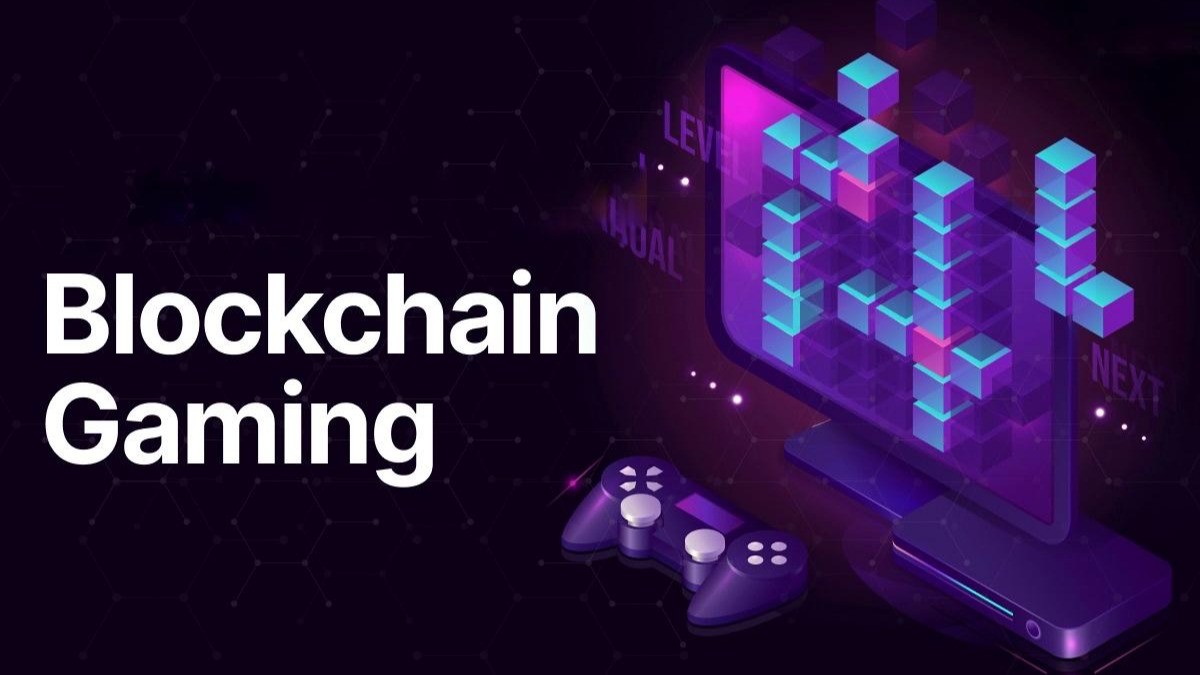
Instead of keeping every digital item inside a company’s private database, certain assets can be represented as blockchain-based tokens. In theory, this could allow players to hold, transfer or sell digital items independently of a particular game’s internal system. It is one of the ideas behind Web3 gaming, a sector that combines traditional game design with blockchain networks, digital wallets and tokenised assets.
The concept has attracted plenty of criticism as well as enthusiasm. Some players see blockchain as an unnecessary addition to gaming, while supporters argue that it could create a more open economy around digital ownership. For German audiences, the more useful question is not whether every game needs blockchain, but whether the technology can solve genuine problems that traditional gaming platforms have not solved particularly well.
The Difference Between Owning and Using a Digital Item
Consider a player who buys a cosmetic item in an online game.
The player may pay €20 for it, but what exactly has been purchased?
In many traditional games, the player receives permission to use the item within the publisher’s ecosystem. The item may be tied to the player’s account and may disappear if the game is discontinued, the account is closed or the publisher changes its policies.
Blockchain can potentially change the technical structure behind that relationship.
If the item is represented by a token on a blockchain, the player may hold the token directly in a compatible wallet. The asset can exist independently of the game’s internal database, at least at the ownership layer.
That does not automatically mean the item will work in every game.
A blockchain can prove that a particular wallet controls a particular token, but another game still needs to recognise and support that token. Interoperability is therefore one of the biggest promises—and one of the biggest unresolved challenges—of Web3 gaming.
Why Would Players Want This?
The strongest argument for blockchain gaming is digital ownership.
Players already spend enormous amounts of time and money building digital collections. A rare item can represent financial value, emotional value or simply years of progress.
If digital assets could move between compatible applications, players might have greater control over what happens to those assets.
Imagine buying a virtual item in one game and later selling it to another player without going through the original publisher’s marketplace. Or imagine completing a game and retaining certain digital collectibles even after you stop playing.
That could create a more open digital economy.
However, there is an important limitation. Ownership of a blockchain token does not force a developer to support that token forever. If a game shuts down its servers, the token may remain in the wallet, but its practical usefulness could disappear.
Blockchain can preserve ownership records.
It cannot guarantee that a game will remain popular.
Where NFTs Fit Into Web3 Gaming
Non-fungible tokens, commonly called NFTs, are one of the technologies associated with blockchain-based gaming.
Unlike interchangeable cryptocurrencies, NFTs can represent individual digital items with unique identifiers. This makes them suitable for representing things such as collectibles, characters, virtual land or special in-game items.
The concept became controversial when some projects focused heavily on selling digital items at speculative prices rather than building enjoyable games.
That created a perception problem for the entire sector.
A game should still be a good game.
If the only reason people are playing is the expectation that an NFT will increase in price, the project starts looking more like a speculative marketplace than entertainment.
The more interesting approach is to make ownership useful without making speculation the central attraction.
Could Players Earn Money From Games?
Play-to-earn models became one of the biggest Web3 gaming trends.
The basic idea was simple: players could earn tokens or digital assets by spending time inside a game, and those assets could potentially be sold or exchanged.
The model attracted significant attention because it appeared to turn gaming into an income-generating activity.
But the economics proved difficult.
If a game distributes too many rewards without creating enough demand for those rewards, the value of the tokens can fall. New players may then be needed to support the economic system, creating an unhealthy dependence on continuous growth.
This is why newer discussions around blockchain gaming increasingly focus on player-owned economies rather than simply promising players an income.
There is an important difference between allowing players to trade digital assets and telling them that playing the game will make them money.
The first is a technological feature.
The second is a financial promise that needs much greater scrutiny.
What Blockchain Can and Cannot Do
Blockchain is useful when several participants need to share ownership records without relying entirely on one company’s database.
Gaming is not automatically one of those situations.
A game publisher can already maintain a database of items quickly and cheaply. If blockchain adds transaction fees, wallet management and technical complexity without providing a meaningful benefit, there is little reason for developers to use it.
The stronger use cases appear where players genuinely benefit from portable ownership, open marketplaces or verifiable scarcity.
The European Commission’s broader blockchain strategy highlights interoperability as an important requirement for blockchain and Web3 to succeed, particularly the ability for blockchain systems to work with one another and with existing infrastructure. (digital-strategy.ec.europa.eu)
That principle applies directly to gaming.
An isolated blockchain item has limited value if no other application can recognise it.
Why Interoperability Is So Difficult
It sounds simple to say that an item should work across different games.
In practice, it is extremely complicated.
A sword from one game’s universe may have completely different characteristics from a weapon in another. One game may use a realistic visual style while another uses cartoon characters. Developers also have different economic systems, technical standards and intellectual-property rights.
There is therefore no automatic reason why a token representing a digital sword should function inside another game.
True interoperability would require developers to agree on standards and practical rules around how digital assets are interpreted.
This is one reason the future of Web3 gaming may involve ecosystems of connected applications rather than every blockchain item working everywhere.
What Does This Mean for German Players?
German gamers are unlikely to adopt blockchain games simply because they are labelled “Web3.”
The game still needs to be entertaining.
Players will expect reasonable performance, attractive design, fair mechanics and strong security. They will also want clear information about what they are purchasing and what happens to their digital assets if the game changes.
The regulatory environment adds another layer.
The European Union has developed a broader regulatory framework for many crypto-assets and related services through MiCA, while blockchain projects can also intersect with other areas of European law depending on how they are structured. The European Commission continues to support blockchain innovation through initiatives such as the European Blockchain Sandbox, which provides a setting for developers and regulators to examine innovative blockchain use cases. (digital-strategy.ec.europa.eu)
For German players, this makes it important to distinguish between a genuine gaming product and a financial product disguised as a game.
The Security Question Cannot Be Ignored
A traditional game account can be frustrating to lose, but blockchain-based assets can introduce a different level of responsibility.
Players may need to protect wallets and approve transactions. A malicious website could attempt to trick a user into signing a transaction that transfers an asset. A compromised smart contract could potentially affect tokens held by users.
The European Commission identifies cybersecurity as one of the key areas in its blockchain and Web3 strategy, alongside data protection and interoperability. (digital-strategy.ec.europa.eu)
This means a successful blockchain game cannot treat wallet security as an optional extra.
The safer approach is to make blockchain interactions understandable and minimise the number of complicated decisions players need to make.
Could Web3 Gaming Become More Normal?
Possibly, but it may not look like the early vision.
The future may involve games where blockchain is almost invisible. Players could simply buy, sell or transfer supported digital items through familiar interfaces while the blockchain records ownership in the background.
The technology would matter, but the player would not necessarily need to think about it.
That could be a much more realistic path toward adoption.
Just as most people use online banking without thinking about the underlying database architecture, gamers may eventually use blockchain-based ownership systems without considering themselves “crypto users.”
What Would Make Blockchain Gaming Worthwhile?
The answer is surprisingly straightforward.
The game must be good first.
Blockchain should then provide something genuinely useful—perhaps portable ownership, transparent scarcity, open marketplaces or digital assets that remain meaningful beyond a single platform.
If blockchain adds nothing except tokens, transaction fees and complicated wallets, players have little reason to care.
But if it allows players to retain meaningful ownership of the digital objects they spend years collecting, the technology becomes more interesting.
For Germany and the wider European market, the development of Web3 gaming will likely depend on this practical approach. European policymakers are already encouraging blockchain innovation while placing emphasis on security, privacy, interoperability and regulatory certainty.
The next generation of blockchain games therefore does not need to convince everyone that gaming should become a financial market.
It needs to demonstrate something much simpler:
that when players invest time and money into digital worlds, blockchain can give them a more meaningful form of ownership without making the games themselves harder, riskier or less enjoyable.