
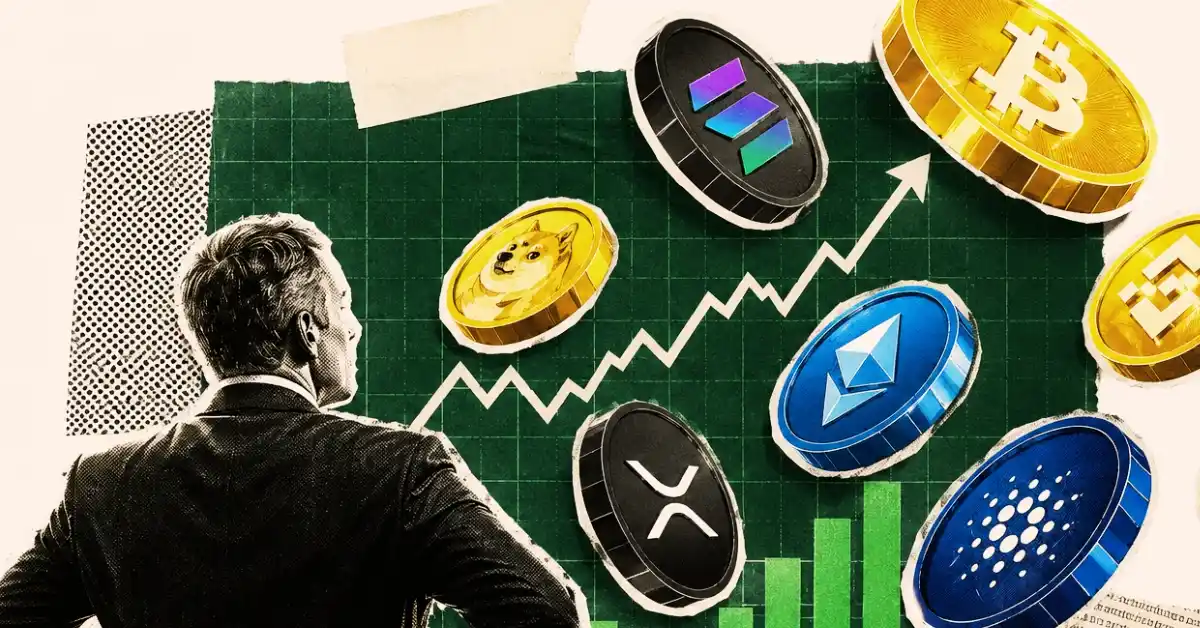


Every crypto market cycle produces a new generation of altcoins.
Some arrive with ambitious technology and experienced developers. Others are built around a popular trend, a viral community or a clever marketing campaign. A few eventually become established projects, while many disappear almost as quickly as they appeared.
For investors, this creates an obvious problem.
A new cryptocurrency can look incredibly attractive precisely because nobody knows yet how successful it might become. The market capitalisation is small, the project promises major improvements and early investors are presented with the possibility of getting in before everyone else.
That possibility can be exciting.
It can also be extremely risky.
A new altcoin has little historical evidence to prove that its technology works, that its developers can deliver their plans or that users actually need the product. For German investors considering newer projects, the right approach is therefore not to ask whether a token could become the next major cryptocurrency, but whether there is enough evidence to justify taking the risk.
Start With the Team Behind the Project
The first thing worth investigating is who is actually building the cryptocurrency.
Some projects publish detailed information about their developers, founders and advisers. Others provide very little information.
Anonymous development is not automatically a problem. Cryptocurrency has a long history of projects being built by pseudonymous developers.
The bigger issue is transparency.
Can you understand who is responsible for the project’s development?
Is there evidence that the team has experience in blockchain technology or the industry it is targeting?
Has the team previously built something successfully?
Are the developers actively working on the product?
These questions will not tell you whether the token price will rise.
They can, however, help determine whether there is a credible organisation or development community behind the promises.
Read the Project’s Main Documents
A new altcoin will often publish a white paper, technical documentation or roadmap explaining its objectives.
Do not treat these documents as marketing material that you are expected to accept without question.
Read them critically.
What problem is the project trying to solve?
Why does blockchain technology make sense for that problem?
Why does the project need its own token?
How is the network expected to work?
What will the token actually be used for?
What happens if adoption is slower than expected?
The last question is particularly useful.
Many projects explain what happens if everything goes according to plan.
Fewer explain what happens if the plan fails.
A realistic project should acknowledge limitations rather than presenting its future as guaranteed.
Be Suspicious of Unrealistic Promises
Crypto marketing can become extremely ambitious.
A new project might claim that it will transform banking, replace major financial systems, revolutionise the internet or become the next global payment network.
Ambition is not necessarily a problem.
The problem begins when extraordinary claims are presented without convincing evidence.
Be especially careful when a project promises guaranteed returns, fixed profits or an investment opportunity with almost no downside.
No cryptocurrency can guarantee that its token price will rise.
Technology can fail.
Markets can collapse.
Competitors can emerge.
Regulation can change.
Even excellent projects can struggle to achieve adoption.
A realistic investment case should include uncertainty.
If a project talks only about success and never about risk, investors should ask why.
Understand Why the Token Exists
This is one of the most important questions for any new altcoin.
Why does the project need a cryptocurrency?
A token can have several legitimate functions.
It might be required to pay network fees.
It might help secure a blockchain through staking.
It might be used for governance.
It might provide access to a particular application.
It might play a role in decentralised infrastructure.
But sometimes the token appears to have little practical purpose beyond being traded.
That distinction matters.
If the underlying product succeeds but the token does not have a meaningful role in that product, investors need to question how the project’s growth would translate into demand for the token.
A successful company and a successful cryptocurrency are not necessarily the same thing.
Look at the Token Distribution
New altcoins often allocate tokens to different groups before launch.
These may include developers, founders, early investors, advisers, community programmes and ecosystem funds.
The distribution matters because ownership can become concentrated.
Imagine a project launches with 100 million tokens.
If a small group controls a large percentage of those tokens, those holders may have significant influence over the market.
They may also eventually sell.
Investors should therefore find out how many tokens are circulating and how many remain locked.
The difference can be enormous.
A token with a €50 million market capitalisation might sound like a small project with plenty of room to grow.
But if only a small percentage of the total supply is currently circulating, the future market value could look very different once additional tokens are released.
Why the Unlock Schedule Matters
Token unlocks are often overlooked by beginners.
A project may initially restrict tokens allocated to founders or early investors. Those tokens can then become available according to a predetermined schedule.
The purpose may be to prevent everyone from selling immediately after launch.
But once the tokens become transferable, their owners have the option to sell.
If large quantities enter the market while demand remains weak, the additional supply can create pressure on the price.
This does not mean every token unlock causes a crash.
The market may absorb the new supply if adoption and demand are growing.
The important point is simply to know when the supply is expected to change.
A new investor should never look only at today’s circulating supply.
Check Whether People Are Actually Using It
A new altcoin may have thousands of followers before it has a functioning product.
That is why user activity is so important.
If the project claims to be building a blockchain, look at network activity.
If it is developing a DeFi application, examine whether people are actually using the service.
If it is creating infrastructure for businesses, look for evidence of integrations or real-world applications.
Early projects naturally have limited adoption.
That is understandable.
The question is whether activity is growing in a credible way.
There is a major difference between a project with 5,000 users and a project claiming it will eventually have five million users.
The first is evidence.
The second is a forecast.
Investors should not value forecasts as though they were already reality.
Do Not Confuse Partnerships With Adoption
New crypto projects frequently announce partnerships.
The announcement can sound impressive.
But what does the partnership actually involve?
Is the partner using the technology?
Is there a commercial agreement?
Is the project being integrated into an existing product?
Or is it simply a conversation, collaboration or promotional arrangement?
The word “partnership” can cover many different relationships.
Investors should therefore look for substance rather than headlines.
A real integration can be meaningful.
A logo on a presentation slide is much less informative.
This distinction becomes especially important when researching newly launched altcoins that are trying to establish credibility.
Examine the Competition
A new project does not get a clean market simply because it is new.
It enters an industry where other companies and blockchains may already have years of development behind them.
Ask what alternatives users currently have.
If the project is building a smart-contract platform, compare it with established networks.
If it is creating a decentralised exchange, compare its features with existing platforms.
If it is targeting blockchain payments, examine the other networks competing in that area.
Then ask the difficult question:
Why would users switch?
Lower fees can be an advantage.
Better technology can be an advantage.
A better user experience can be an advantage.
But “we are newer” is not necessarily a competitive advantage.
Why Liquidity Matters Immediately After Launch
New tokens can experience dramatic price movements shortly after launch.
This can happen because only a limited amount of the token is available for trading.
If demand suddenly increases, the price can move very quickly.
That may make the cryptocurrency look extremely successful.
But low liquidity can create serious problems when investors try to sell.
The price shown on an exchange may represent only a relatively small number of recent trades.
A large investor attempting to exit may discover that there are not enough buyers at the displayed price.
This is known as slippage.
For new altcoins, liquidity should therefore be considered before potential returns.
A token that can rise quickly can also become difficult to exit quickly.
Watch the Community Carefully
Community activity can be useful when evaluating a new cryptocurrency.
A healthy community can help developers identify problems, attract users and build applications.
But crypto communities can also become extremely speculative.
If discussions focus almost entirely on price targets, exchange listings and promises of enormous returns, investors should be cautious.
A stronger community tends to discuss the actual technology as well.
People ask questions.
Developers respond.
Users report problems.
New applications are demonstrated.
Improvements are debated.
That type of activity provides more information than thousands of messages simply predicting that the token will “moon.”
Consider Security Before Potential Returns
A new cryptocurrency has not had as much time to prove its security.
This matters particularly for projects involving smart contracts and decentralised finance.
An inexperienced team can make programming mistakes.
A smart contract can contain vulnerabilities.
An external system can provide incorrect information.
An attacker can discover an exploit that was not identified during testing.
Before putting significant money into a new project, investors should therefore investigate whether the technology has undergone meaningful testing and security review.
Even an audited project is not guaranteed to be safe.
An audit reduces some uncertainty.
It does not eliminate technical risk.
What About Regulation in Germany?
German investors also need to consider the European regulatory environment.
The introduction of MiCA has created a more structured framework for many crypto-assets and crypto-asset services across the European Union.
However, this does not mean that every newly launched token automatically receives the same regulatory treatment.
The characteristics of the asset, how it is issued and the services connected to it can all matter.
A token being available on an international platform does not necessarily mean that it will be available through every European provider.
Investors should therefore avoid assuming that a new altcoin is legitimate simply because it appears on a popular exchange.
Regulatory status and investment quality are separate questions.
Never Let Early Success Replace Research
Suppose you invest in a new altcoin and it doubles within a few days.
That can create a powerful psychological effect.
You may start believing that your research was better than everyone else’s.
You may invest more.
Then the token falls 60%.
This is one reason early gains can actually increase risk.
They create confidence before the investor has enough evidence to justify that confidence.
A new project should be evaluated based on its fundamentals regardless of whether its price is rising or falling.
If the investment case is strong, rising prices should not be the only reason to buy more.
If the investment case is weak, an early profit does not make it stronger.
Build a Simple Pre-Purchase Checklist
Before buying a newly launched altcoin, ask yourself:
What problem is the project solving?
Why does it need a token?
Who is developing it?
Is there a functioning product?
Are people using it?
Who owns the tokens?
When will more tokens be released?
How liquid is the market?
What competitors already exist?
What could cause the project to fail?
What regulatory considerations apply?
And perhaps the most important question:
What information would make me decide not to invest?
If you cannot identify a reason to walk away, you may already be too emotionally attached to the opportunity.
New Does Not Mean Early
Crypto marketing often encourages investors to believe that buying a new token means getting in early.
But being early is not automatically an advantage.
You can be early to a successful project.
You can also be early to a project that eventually fails.
The important distinction is whether you are early to genuine adoption or simply early to speculation.
A cryptocurrency that already has a working product, growing users and active development may offer more evidence than one that has nothing more than an ambitious roadmap.
The Real Opportunity Is Finding Evidence Before the Crowd
New altcoins will always attract attention because they offer something established cryptocurrencies cannot easily provide: the possibility of discovering a project before it becomes widely known.
That possibility is real.
But so is the possibility of losing most of your investment.
For German investors, the sensible approach is to treat a new altcoin as a research project before treating it as an investment.
Study the technology.
Understand the tokenomics.
Investigate the team.
Look for actual users.
Check the liquidity.
Understand the competition.
Consider the regulatory environment.
And never allow a countdown, influencer or rapidly rising chart to make the decision for you.
The advantage of discovering an altcoin early is not that you can buy before everyone else; it is that you have the opportunity to investigate it before the market has already decided what it is worth.