


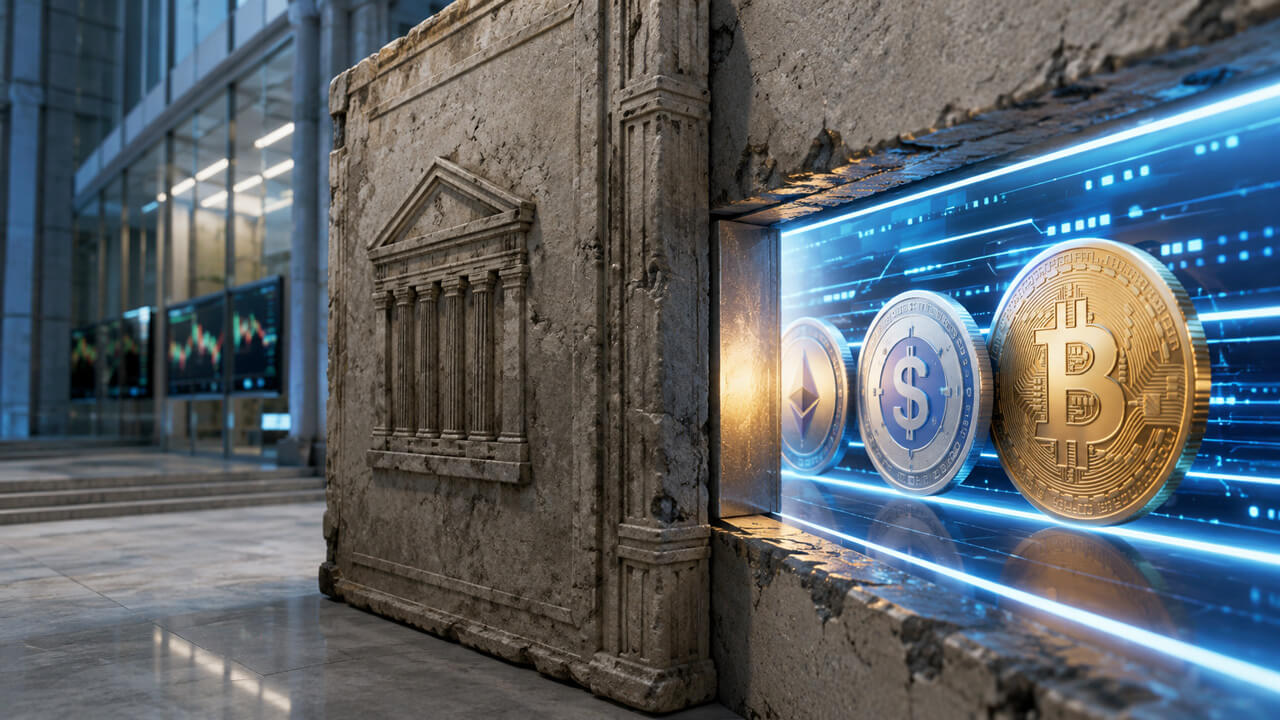




If Bitcoin is often described as the best-known digital asset, stablecoins are arguably one of the most useful pieces of infrastructure underneath the wider crypto economy. They are designed to maintain a relatively stable value, usually by referencing a traditional currency such as the US dollar or euro, and they can move across blockchain networks without relying on the same payment rails used by conventional banks.
That makes stablecoins particularly important in decentralised finance, or DeFi. They are used for trading, lending, borrowing, liquidity provision and moving funds between different applications. For German crypto users, they also create an interesting connection between digital assets and the euro-based financial system, especially as European regulators continue developing rules for crypto-assets and stablecoins.
The attraction is easy to understand. A trader may want the programmability and speed of blockchain transactions without constantly dealing with the extreme price fluctuations associated with Bitcoin or many other cryptocurrencies. But “stable” does not mean risk-free, and understanding what actually supports a stablecoin is essential before treating it as digital cash.
What Exactly Is a Stablecoin?
A stablecoin is a type of crypto-asset designed to maintain a relatively stable value against another reference asset. In the most familiar examples, that reference is a fiat currency such as the US dollar.
The basic idea is straightforward. If a token is intended to remain close to €1 or $1, users can potentially use it within blockchain applications without being exposed to the same day-to-day price swings as a conventional cryptocurrency. The token can then function as a unit for trading, settlement or collateral while remaining part of the blockchain ecosystem.
However, different stablecoins use different mechanisms to try to maintain their value. Some are backed by reserves of traditional assets, while others use crypto collateral or algorithmic mechanisms. These structures can have very different risk profiles.
For that reason, looking only at the word “stablecoin” is not enough. Users need to understand what stands behind the token and how holders are expected to redeem it.
Why Does DeFi Need Stablecoins?
DeFi applications operate largely with digital assets, but many financial activities require something that behaves more predictably than a volatile cryptocurrency.
Consider a decentralised lending platform. A borrower may not want to take out a loan denominated in an asset whose value can rise or fall by a large percentage within a short period. A stablecoin can provide a more predictable unit for the transaction while still allowing the loan to operate on a blockchain.
The same applies to decentralised trading.
A trader can swap between volatile assets and stablecoins without necessarily converting back into euros or dollars through a traditional financial institution every time. Stablecoins can therefore act as a bridge between highly volatile crypto-assets and a more stable reference value.
Research into DeFi has identified stablecoins as a major category within the ecosystem, alongside areas such as liquidity pools and aggregator protocols.
How Are Stablecoins Used in Everyday DeFi Activity?
There is no single use case.
A stablecoin can sit in a crypto wallet, be traded on a decentralised exchange, serve as collateral for a loan or be deposited into a liquidity pool. It can also be moved between blockchain addresses at any time the relevant network and token support the transaction.
For someone using DeFi, this flexibility can be extremely useful.
Imagine an investor who has sold a volatile cryptocurrency but does not want to immediately move the proceeds into a bank account. Converting into a stablecoin can allow the investor to remain within the blockchain ecosystem while holding an asset designed to track a more stable value.
This does not remove financial risk. It simply changes the type of exposure.
The investor may no longer be taking the same price risk as when holding Bitcoin or another volatile token, but they are now exposed to the stablecoin’s reserves, issuer, redemption mechanism, smart contracts and regulatory structure.
What Keeps a Stablecoin Stable?
This is the question that matters most.
A stablecoin’s stability depends on its design.
A reserve-backed stablecoin may hold assets intended to support the value of tokens in circulation. The quality, liquidity and transparency of those reserves therefore become important.
A crypto-collateralised stablecoin may rely on excess collateral deposited into a smart contract. If the collateral falls sharply in value, the system may need to liquidate positions or take other actions to maintain the stablecoin’s target.
Other designs attempt to maintain a peg through algorithms and market incentives.
These approaches are not interchangeable.
A stablecoin backed by highly liquid reserves has a different risk profile from one depending heavily on market incentives or volatile collateral.
That is why investors should investigate the mechanism rather than assuming that every token labelled a stablecoin behaves in the same way.
Why Regulation Matters So Much in Europe
Stablecoins have become an important regulatory subject in the European Union.
The EU’s Markets in Crypto-Assets Regulation, commonly known as MiCA, establishes a harmonised framework for crypto-assets and includes specific categories for asset-referenced tokens and e-money tokens. The framework also introduces requirements relating to issuers and crypto-asset service providers.
This matters for German users because Germany operates within the EU regulatory framework.
The European Commission is also reviewing MiCA as the digital-asset market continues to develop. The Commission launched consultations in May 2026 to assess whether the framework remains fit for purpose in light of market and policy developments.
For users, regulatory clarity can be helpful because it can make the responsibilities of issuers and service providers easier to understand. At the same time, regulation does not remove the underlying market and technology risks associated with digital assets.
What About Euro Stablecoins?
For German readers, euro-denominated stablecoins are particularly interesting.
Most of the global stablecoin market has historically been dominated by dollar-linked assets, but a euro-based digital asset could potentially make blockchain transactions more natural for users and businesses operating within the euro area.
A euro stablecoin could theoretically be used for on-chain payments, trading, lending or settlement while keeping the reference value in euros.
The European Commission has highlighted stablecoins as a possible settlement instrument for tokenised assets, while also noting that the euro’s role in digital financial markets remains an important policy consideration.
The subject is not without controversy. European policymakers continue to debate how stablecoins should interact with commercial banks, monetary policy and financial stability. The European Central Bank has raised concerns about risks associated with the expansion of stablecoins and their potential effects on bank funding and monetary policy.
That debate is likely to remain important as blockchain-based finance develops.
Stablecoin Does Not Mean Bank Deposit
This distinction is especially important for newcomers.
A euro stablecoin may be designed to maintain a value close to €1, but that does not automatically make it equivalent to holding €1 in a German bank account.
A bank deposit exists within the banking system and is subject to the legal and regulatory framework applicable to deposits. A stablecoin operates according to its own issuance, reserve, redemption and technological structure.
The protections, risks and legal rights can therefore be different.
Users should never assume that because a token is designed to track the euro, it carries exactly the same protections as euros held in a traditional bank account.
What Risks Should DeFi Users Watch?
Stablecoin risks can appear in several forms.
Reserve risk is one. If the assets supporting a token are insufficient, illiquid or difficult to access, maintaining the intended value can become more challenging.
Redemption risk is another. Users need to understand how and under what conditions tokens can be exchanged for the referenced asset.
There is also smart-contract risk, particularly when stablecoins are integrated into DeFi applications.
Then there is depeg risk. A stablecoin can temporarily or significantly move away from its intended reference value. Even a small deviation can matter when large amounts of capital are involved.
Finally, there is regulatory risk. Rules can affect which stablecoins can be offered, where they can be used and how service providers interact with them.
Why Stablecoins Could Matter Beyond Crypto Trading
The most interesting future use of stablecoins may not be speculation.
Blockchain-based settlement could potentially make some cross-border transfers faster or more programmable. Businesses could use digital currencies to move value between blockchain applications. Tokenised financial assets could potentially use stablecoins as part of their settlement process.
The European Commission has specifically discussed the relationship between stablecoins and tokenised assets, highlighting their potential role in digital settlement infrastructure.
That does not mean traditional payments will suddenly disappear.
Banks remain deeply embedded in the European financial system, and regulated payment infrastructure offers advantages that DeFi does not automatically provide.
Instead, stablecoins may become another layer of financial infrastructure that sits alongside existing systems.
What Should German Crypto Users Look For?
Before using a stablecoin in DeFi, it is worth asking a few straightforward questions:
- What exactly is the token designed to track?
- What assets or mechanisms support its value?
- Who issues or governs it?
- How does redemption work?
- What happens if the token loses its peg?
- Is the asset available through a service that operates legally in the user’s jurisdiction?
- What blockchain and smart contracts are involved?
- What fees apply when moving or converting it?
- How should transactions be recorded for tax purposes?
These questions may seem basic, but they can reveal significant differences between apparently similar stablecoins.
The Bigger Role of Stablecoins
Stablecoins occupy an unusual position in the crypto economy.
They are digital assets, but their purpose is often to reduce the volatility associated with other digital assets. They are deeply connected to DeFi, yet their development is increasingly being discussed by banks, regulators and policymakers.
For German users, the European regulatory environment makes the subject even more relevant.
The future of DeFi may not be built entirely around volatile cryptocurrencies. It could increasingly involve a mixture of stablecoins, tokenised assets, smart contracts and traditional financial infrastructure.
That is why stablecoins deserve attention beyond their role as a convenient trading instrument.
Their real significance may be that they provide a bridge between the relatively stable world of traditional currencies and the programmable, always-on infrastructure of blockchain finance.